Standards, Safeguarding, and Supervision, Why Regulation Matters in Sleep
In an unregulated market, the discussions about regulation are in danger of descending into defending professional self interest and market share, whilst losing sight of the needs of poor sleepers

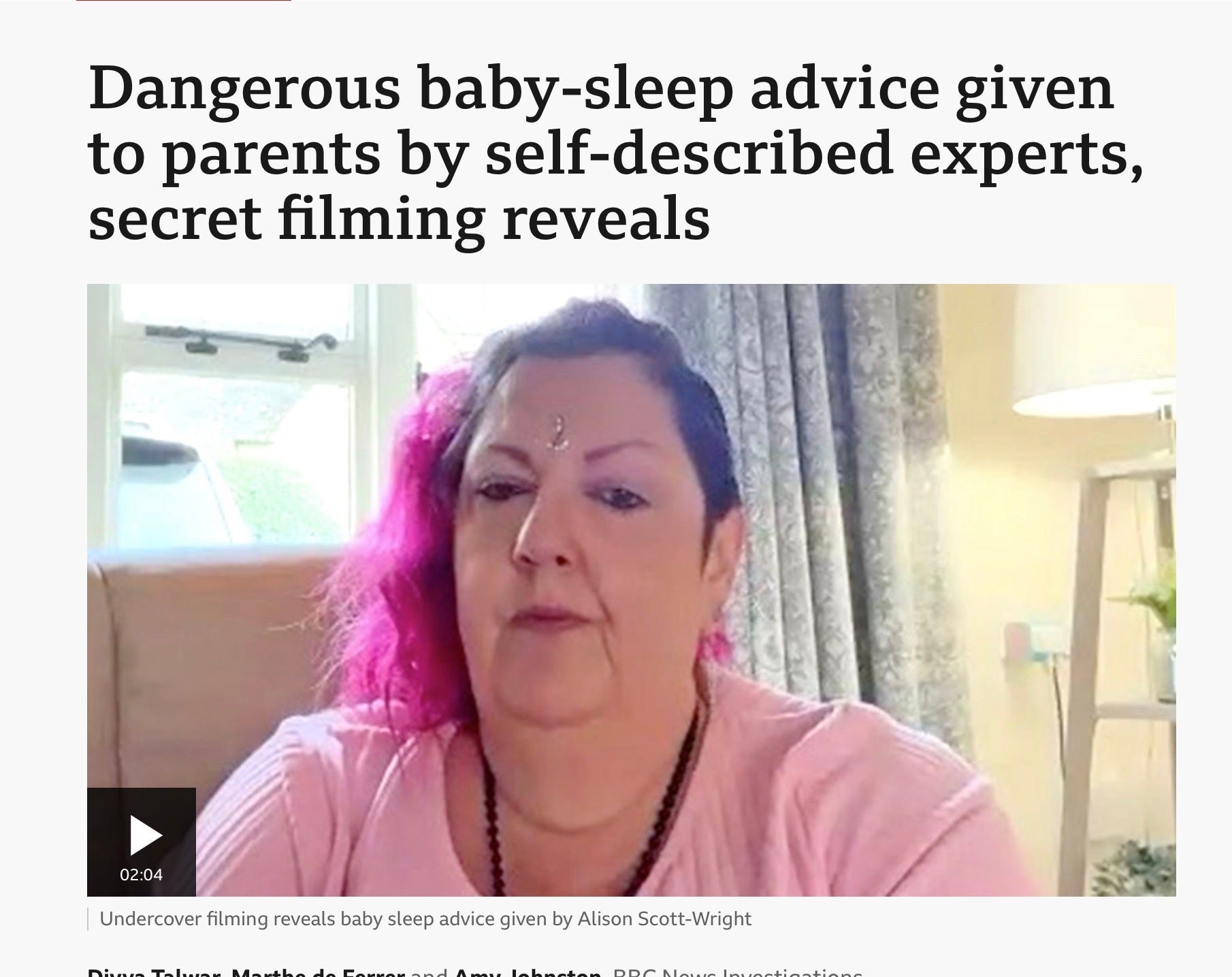
This week, the BBC investigation into baby sleep advice has sparked a conversation that sleep has needed for a very long time, standards, safeguarding, supervision, and regulation.
The investigation focused on people offering sleep advice to parents that potentially went against safe sleep guidance from organisations like the NHS and the Lullaby Trust, guidance specifically designed to reduce the risk of sudden infant death syndrome. Predictably, a lot of the reaction within the sleep industry has been performative. Social media statements, people trying to position themselves as the solution, and in some cases, people trying to remove competitors from the market under the banner of “raising standards”.
But the most important thing in any conversation about regulation is not commercial advantage, professional status, or protecting market share. It is protecting people.
Education, reassurance, signposting, coaching, and clinical services are all designed to help people sleep better. That should be the starting point. But if we are honest about where sleep currently sits as an industry, there are major gaps in how people are trained, supported, supervised, and held accountable.
Before we move on to my own experiences of how we educate sleep practitioners, here are the stories catching my eye in Sleep This Week….
🛌 Sleep This Week
💊The New Sleeping Pill That Sleep Medicine Actually Seems Excited About
Daridorexant, sold as Quviviq, is getting growing attention in the UK as a different kind of insomnia drug.
Unlike the old “knock you out and hope for the best” tablets, this one targets orexin, the system that helps regulate wakefulness. Sleep medicine finally catching up with sleep biology.
🧠 Matthew Walker’s New Sleep Innovation Lab Is Officially Underway
Matthew Walker’s new Sleep Innovation Laboratories at UT Dallas are now up and running, combining neuroscience, sleep science and human performance research.
Sleep research is becoming more interdisciplinary, more commercial and a lot more performance focused. Let’s hope he doesn’t use this platform to spread fear and concern around sleep, ans he has done in the past, and he looks to educate to reassure.
📡 Contactless Sleep Tracking Claims Keep Growing
A radar based device called the Sleepal AI Lamp claims it can measure sleep stages accurately without wearables or body sensors.
Interesting technology, but passive sleep tracking still has a long way to go before it replaces proper sleep assessment in the real world.
🧪 Sleep Apnea Diagnosis Keeps Moving Closer to Home
Researchers behind “KindSleep” say they can estimate sleep apnea severity using just oximetry and AI models.
The direction of travel is obvious now, cheaper, simpler and more scalable sleep diagnostics outside the sleep lab.
🧠 Automated Sleep Scoring Is Pushing Further Into Neurology
New research tested fully automated sleep staging tools in Parkinson’s disease and REM sleep behaviour disorder.
The sleep tech world keeps trying to automate what used to need highly trained clinicians, with mixed results depending on who you ask.
🛏️ Sleep Tech Is Still Chasing Big Growth Numbers
Another round of market forecasts predicts huge growth across sleep tech, wearables, apps and AI driven sleep tools.
Sleep is now sitting right at the intersection of healthcare, wellness, consumer tech and investor hype.
Now back to the long read……
My Own Experience of Sleep Training
I have my own experiences of this. Years ago, I originally trained as a sleep practitioner for children through an organisation where I went from running a mattress shop to becoming a sleep practitioner after a three day training course that was, and as far as I know still is, classed as CPD, Continuous Professional Development. It was a course that anybody could do and a course that many people within the mattress industry have completed.
I also want to give that organisation their due. Without them, I would not be able to do what I do now. Without the opportunities they gave me, I would not have been able to help the people I have helped. I also completed other training with them, including a one day ACT for insomnia course, other CPD style training, and many of the colleagues within the organisation offered incredible support to me personally. None of this is about attacking individuals or pretending there are bad intentions involved.
In all this, I think there are only a handful of people who are fully aware that what they are doing does not meet basic moral or ethical standards. For lots of people, they simply do not know what they do not know. But that is where proper training needs to come in.
But looking back now, there were situations I was put in that simply did not reflect good practice, either for me as a practitioner or for the people I was supposed to be helping.
For example, I was sent into stores belonging to a major baby sleep retailer to provide sleep advice sessions to parents to be, despite having no formal training in infant sleep. The content had been created internally by a marketing manager and was delivered in a very prescriptive, one size fits all way.
More importantly, I found myself working as a lead practitioner on a large project involving vulnerable people while having very little safeguarding training or structured supervision. I was essentially told not to close the door during sessions, given a few informal guidelines about where to seek help, and expected to manage situations that were far beyond what someone with a short CPD style qualification should have been dealing with.
The difficult part is that I know I helped people. Many of the people I worked with benefited. But I also drove home crying more times than I care to remember because some of the situations I encountered were horrific, and I felt completely out of my depth.
That is not good safeguarding for the practitioner, and it is not good safeguarding for the people they work with.
Standards Should Not Mean Closing the Door
Now, I understand the obvious criticism here. I trained with an organisation that would train almost anybody, and now I am arguing that standards matter.
But that is not hypocrisy. In fact, it is exactly why standards matter.
I absolutely believe there should be pathways for people from different backgrounds to enter sleep support. Somebody running a mattress shop, a fitness professional, a teacher, or someone working in wellbeing should be able to learn and develop into a capable sleep practitioner.
The issue is not accessibility. The issue is whether there is proper structure, progression, supervision, safeguarding, and scope of practice around that process.
There are already organisations trying to do this better. There are providers offering structured qualifications with clear entry requirements based on previous education and experience, qualifications designed to be far more than short CPD courses. Within baby and children’s sleep, there are programmes working up to Level 6 standard, qualifications far more in depth and delivered over much longer periods of time than a three day CPD style course.
The Problem With the Current Sleep Industry
Another example brought this home to me recently. A practitioner who had been trying to establish themselves in the sleep industry told me they had completed only half of a baby and children’s sleep course before deciding they needed to start working and earning money.
Again, they had not broken any rules. There are no laws preventing that.
But even if your role is primarily education and signposting, you still need enough understanding to know when something is outside your remit. You need safeguarding awareness. You need supervision. You need access to experienced people you can speak to when difficult situations arise.
Sleep issues are rarely just about sleep. Poor sleep can be linked to abuse, trauma, caring responsibilities, domestic problems, financial stress, mental health challenges, neurodivergence, physical illness, or safeguarding concerns.
Someone might come to you asking about insomnia and reveal something that raises serious alarm bells. If you are working in sleep support without proper training, without clear boundaries, and without supervision, you may not even recognise what you are dealing with.
This is the fundamental problem in sleep right now. We rely too heavily on the personal ethics and self awareness of individuals.
Do they understand their limits? Do they know when to refer? Do they know what sits outside their competence? Are they able to protect both the people they work with and themselves?
That is why I do not believe regulation can begin with titles or protected professional status. It has to begin with standards, safeguarding, and supervision. Without those foundations, regulation just becomes branding.
The Clinical Versus Coaching Debate
What has been particularly noticeable after the BBC investigation is the response from parts of the adult sleep world.
Some private clinical sleep experts have argued that all sleep problems should be treated purely as clinical issues and only by clinicians.
But that raises obvious questions.
The NHS already struggles to provide adequate access for many recognised sleep disorders. If every sleep issue becomes medicalised, then large numbers of people will inevitably be pushed into private healthcare. And when demand massively exceeds supply, prices rise, waiting lists grow, and commercial incentives become impossible to ignore.
This also ignores the reality of poor sleep. Most people struggling with sleep do not require clinical treatment. They need education, reassurance, coaching, and support to better understand themselves and their lives. Clinicians are not required for the majority of poor sleepers.
More importantly, a clinical background alone does not automatically mean someone is qualified to deliver high quality sleep support.
Plenty of clinicians received minimal sleep education years ago, perhaps half a day or less, yet now market themselves as sleep experts. Society often assumes competence simply because someone comes from a healthcare profession.
What Proper Coaching Training Looks Like
At the same time, coaching and education should not be dismissed.
I am currently studying a postgraduate certificate in coaching outside the sleep industry because much of my work is in organisations and, in all honesty, there is not currently a practical sleep qualification with the depth and quality I was looking for.
Many people call themselves sleep coaches, including me, but we have not actually had formal training in coaching itself, and that was the gap I was trying to close through the qualification at Leeds Beckett University.
One thing that stands out constantly throughout the course is the repeated emphasis on boundaries, contracting, ethics, safeguarding, and scope of practice. We are continually reminded what coaching is not.
We are not therapists.
We are not psychologists.
We are not clinicians.
We are trained to recognise our boundaries and work within them.
That qualification involves around 400 hours of learning. Many sleep courses are thirty or forty hours. Some are far less.
Quietly Trying to Improve Standards
I have not spent the last few years simply posting on social media about regulation.
Alongside other like minded people within sleep, we have quietly started the process of trying to improve standards within the industry. We did not need the BBC to tell us there was a problem. We saw it constantly.
We saw £29 online baby sleep coaching courses.
We saw a £59.99 qualification for fitness professionals lasting a couple of hours, with provider claiming that a PT could effectively become a sleep coach overnight.
We also saw courses costing tens of thousands of pounds where the pricing appeared to be driven more by social media following and personal branding than educational rigour or professional standards.
At Sleepunity, we have spent a lot of time thinking about this because we do not want to contribute to the problem. We are a social enterprise. Fifty percent of our profits go back into helping people sleep better.
We want the training we deliver and the services we provide to reflect high standards. We also want to support organisations, governing bodies, and others in sleep to develop realistic and rigorous standards that actually protect people.
A lot of that thinking has been shaped by Ian Braid, an independent consultant specialising in duty of care standards in sport. Ian is the former Chief Executive of the British Athletes Commission and contributed to Baroness Tanni Grey Thompson’s Duty of Care in Sport review into welfare standards across elite sport.
His work has influenced how we think about safeguarding, supervision, and standards, not just within sleep retail and wellbeing, but across the wider sleep industry.
What Sleep Support Actually Looks Like
For me, the sleep world broadly falls into four areas.
1. Education, Reassurance, and Signposting
This is comparable to mental health first aid within organisations. It is a role people in charities, or sports teams, in organisations, public healthcare systems and anywhere when anyone is talking baout slep. We want them to do it with authority, and with boundaries.
People in these roles should understand the basics of sleep science, provide reassurance, encourage healthy habits, and signpost to appropriate support. They are not practitioners or clinicians. They are not treating sleep disorders.
2. Coaching
Coaching should help individuals better understand themselves, their routines, behaviours, pressures, and environments.
It should operate with clear ethical boundaries and clear scope of practice, outside clinical diagnosis and treatment. There needs to be understanding of the science of sleep, and what option speople have if they need to be moved into clinical care.
3. Clinical Care
This should arguably be the easiest area to regulate because claims around treatment should match actual expertise and qualifications within sleep medicine.
4. Products
Products should also be held to standards.
Claims about mattresses, supplements, gadgets, trackers, or sleep technologies should be evidence informed, proportionate, and realistic.
Let’s Not Throw the Baby Out With the Bath Water
We also need to be careful not to throw the baby out with the bath water.
There are brilliant people working in sleep, both clinical and non clinical, who may not have formal qualifications but who absolutely have the experience, ability, and track record to help people.
Between them, they have helped millions of poor sleepers.
Regulation should not become a way of excluding good people who have valuable expertise simply because they came into sleep through unconventional routes.
If that happens, poor sleepers will suffer and the industry will suffer.
What Happens Next?
None of this is impossible to solve.
It simply requires people to prioritise the interests of poor sleepers above ego, commercial self interest, or professional gatekeeping.
Unfortunately, parts of the sleep world still resemble the Wild West. If we are not careful, regulation will simply formalise poor practice instead of improving it.
I do not want anyone excluded from sleep. I want there to be a clear pathway that anybody can work towards becoming a practitioner through, regardless of where they start from.
And I do not want anyone driving home in tears because they have been put into positions they should never have been put into in the first place.
That is why standards matter.
That is why safeguarding matters.
That is why supervision matters.
And until those foundations exist properly across the sleep industry, regulation risks becoming little more than a badge.
Thanks for reading Sleep This Week. I’m James — AKA The Sleep Geek — co-founder of Sleepunity and creator of the No Nonsense Approach to Sleep.
At Sleepunity, we believe sleep support should be evidence-informed, individual-led, and grounded in understanding real life — not fear, perfectionism, or one-size-fits-all advice. We want people to have access to experts who genuinely listen, care, understand context, and help sleepers make sense of what’s really going on.
The No Nonsense Approach to Sleep combines science, lived experience, and practical support to help people improve sleep without unnecessary pressure or unrealistic rules.
Alongside coaching, education, and workplace wellbeing, we also develop products and services across the sleep and wellbeing space — from HealthTech and sleep trackers to mattresses, pillows, and everyday consumer products designed to help people sleep and feel better.
If you’d like to learn more about Sleepunity, our work, or the No Nonsense Approach to Sleep, make sure to follow, subscribe, and join us again next time on Sleep This Week.
Sleep well.