The Place We Return To
Inspired by seeing Tracey Emin’s My Bed at Tate Modern, this week’s issue explores why beds are far more than furniture, they are places of safety, vulnerability, recovery and intimacy.

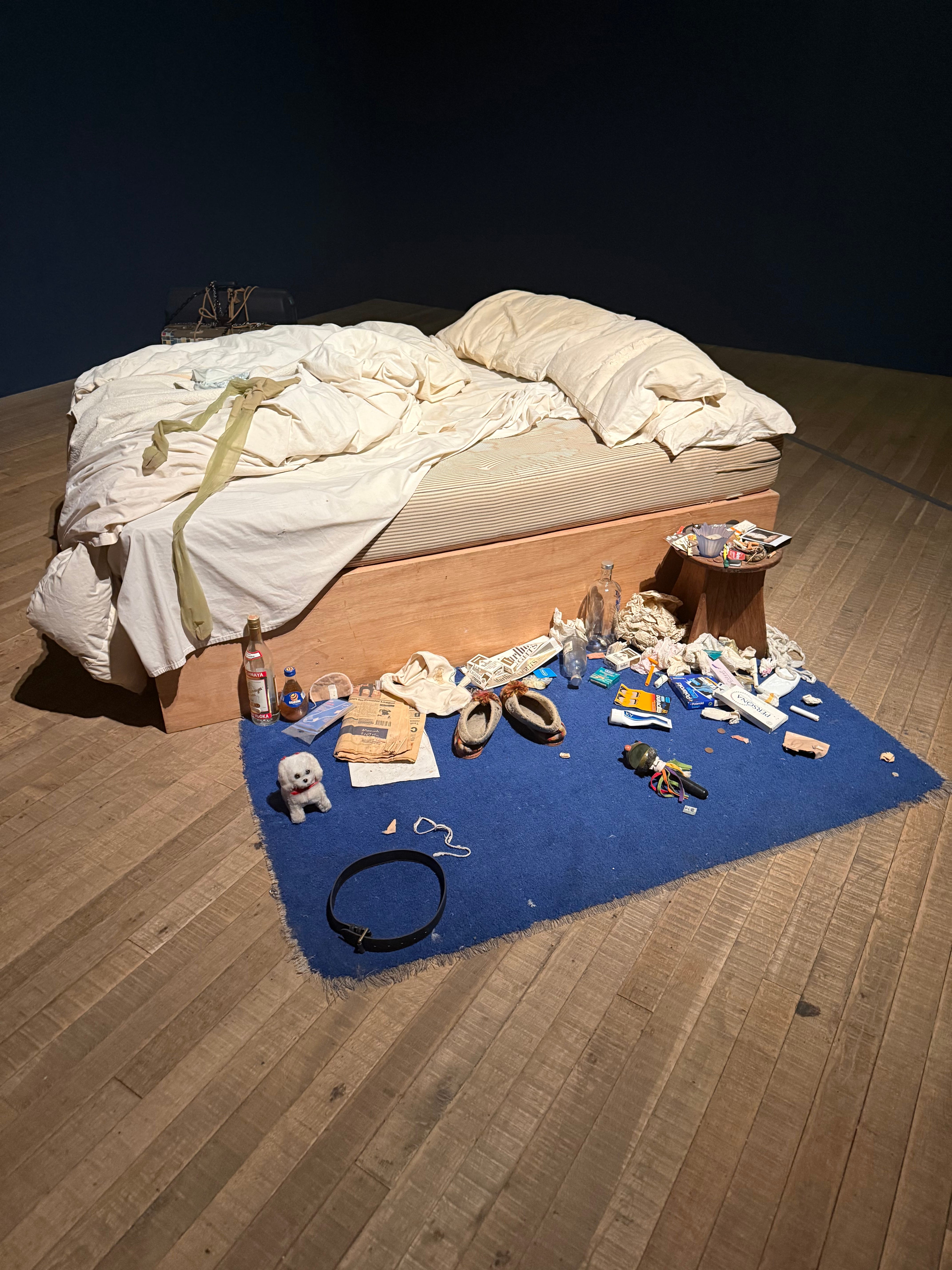
Tracy Emin’s My Bed at the excellent Tate Modern retrospective
Last week I went to the Tracey Emin exhibition at Tate Modern, Tracey Emin: A Second Life. At the centre of it sits My Bed, perhaps one of the most discussed and misunderstood artworks of the last thirty years.
Standing in front of it, what struck me wasn’t the shock value people talked about when it first appeared. It wasn’t the mess. It wasn’t the debris of life scattered around it. It was the overwhelming emotional weight of what a bed actually represents. Emin created the piece after a period of profound depression and emotional collapse, when she had spent days in bed in a semi-conscious state, surrounded by the physical evidence of pain, exhaustion, heartbreak and survival. The work resonated because it captured something most people instinctively understand but rarely articulate: the bed is not just furniture. It is refuge. It is vulnerability. It is recovery. It is grief. It is intimacy. It is survival. It is where the human story happens.
A couple of years ago, I collapsed in the ensuite bathroom at home. When I came round, my immediate instinct was not to call for help or even fully assess what had happened. My first thought was simply to get back to bed. I wanted to get back to the place that felt safe. The irony is that it was a terrible decision because I collapsed again trying to get there and smashed my head against the wardrobe on the way down. But afterwards, when I spoke to other people who had experienced fainting or collapse, many described the same thing. They didn’t run for the front door. They didn’t think about the sofa or a chair. They tried to get back to bed. Back to the place their brain associated with safety, comfort, protection and recovery.
Beds have been fundamental to human existence since the beginning of human life itself. Most of us are born in a bed. Most of us were probably conceived in one. In beds we fall in love, argue, cry, recover, celebrate, scroll endlessly on our phones, read books, make plans, grieve losses and make some of the biggest decisions of our lives. We whisper to partners in the dark about fears we would never say aloud in daylight. We hold sick children in beds. We recover from illness in beds. And for many people, the final chapter of life is spent in one too. Beds are woven into the emotional architecture of humanity. They are both physically protective and emotionally symbolic. They represent security, identity, home, intimacy and escape. That is why My Bed mattered. Tracey Emin wasn’t really asking people to look at a mattress and some dirty sheets. She was asking people to confront human vulnerability and the private reality of being alive.
And yet despite this, we barely take beds seriously at all.
The mattress, pillow and duvet are the products most people will spend more time with than any other objects they ever own. We will spend roughly a third of our lives in contact with them. More time than we spend in our cars. More time than we spend at our desks. More time than we spend wearing most clothes or using most technology. They are central to recovery, physical comfort, emotional regulation, illness, intimacy and rest. Yet as an industry, we often reduce them to discounts, gimmicks, fake science, sales events and endless product jargon. Even the people who make and sell these products rarely stop to acknowledge the role they play in human life.
That feels wrong to me.
Because when you really think about it, these products are not minor household purchases. They are part of the infrastructure of being human.
Your pillow might have comforted you through grief. Your duvet might remind you of childhood security. Your mattress may have carried you through illness, heartbreak, pregnancy, recovery, depression or some of the happiest conversations of your life. People become deeply emotionally attached to beds because beds witness our lives in their rawest and most unguarded moments.
So this week I want to celebrate the bed.
Not as a status symbol. Not as a luxury item. Not as another sleep “hack”. But as one of the most important and emotionally significant spaces in human existence.
I’d love people to share their own stories. What does your bed mean to you? What memories live there? What role have your mattress, pillow or duvet played during difficult periods of life, illness, recovery, parenthood, love or grief? What products have genuinely made you feel safe, comfortable or cared for?
Because perhaps we should all spend a little more time recognising the importance of the place where so much of life actually occurs.
🛌 Sleep This Week
🛏️ Retail Sleep Is Becoming a Lifestyle Category
The latest research shows mattresses, cooling systems, supplements and apps are increasingly being marketed like fitness and longevity products rather than simple sleep aids.
Sleep is no longer being sold as rest, it is being sold as performance, recovery and self optimisation.
🧠Can We Measure Sleep Resilience?
New research looks at the idea of “sleep resilience”, our ability to function emotionally, cognitively and physically after poor sleep.
Not everyone falls apart after a bad night, and understanding why might matter more than chasing perfect sleep.
🚒 Firefighters Improve Sleep with Science Based Support
An Ohio fire department has been working with sleep researchers to help firefighters sleep better around demanding shift schedules.
Turns out people sleep better when you design systems around how humans actually work. Who knew.
👶 Unsafe Baby Sleep Advice Still Slipping Through
A BBC investigation found some maternity staff are still giving parents unsafe sleep advice for babies.
Sleep advice is only useful if it is accurate, practical and consistently delivered.
🛌 US Bedding Industry Staying Optimistic Despite Challenges
Executives at High Point Market struck a surprisingly optimistic tone despite ongoing pressure across retail and manufacturing.
Margins might be tighter, but the bedding industry still believes consumers will keep investing in sleep.
📡 Do Automated Sleep Scoring Systems Actually Work?
A LinkedIn discussion from Michael Scullin looks at the strengths and weaknesses of automated sleep staging tools.
The technology keeps improving, but translating sleep into neat scores is still messier than many companies would like to admit.
Thanks for reading Sleep This Week. I’m James — AKA The Sleep Geek — co-founder of Sleepunity and creator of the No Nonsense Approach to Sleep.
At Sleepunity, we believe sleep support should be evidence-informed, individual-led, and grounded in understanding real life — not fear, perfectionism, or one-size-fits-all advice. We want people to have access to experts who genuinely listen, care, understand context, and help sleepers make sense of what’s really going on.
The No Nonsense Approach to Sleep combines science, lived experience, and practical support to help people improve sleep without unnecessary pressure or unrealistic rules.
Alongside coaching, education, and workplace wellbeing, we also develop products and services across the sleep and wellbeing space — from HealthTech and sleep trackers to mattresses, pillows, and everyday consumer products designed to help people sleep and feel better.
If you’d like to learn more about Sleepunity, our work, or the No Nonsense Approach to Sleep, make sure to follow, subscribe, and join us again next time on Sleep This Week.
Sleep well.